
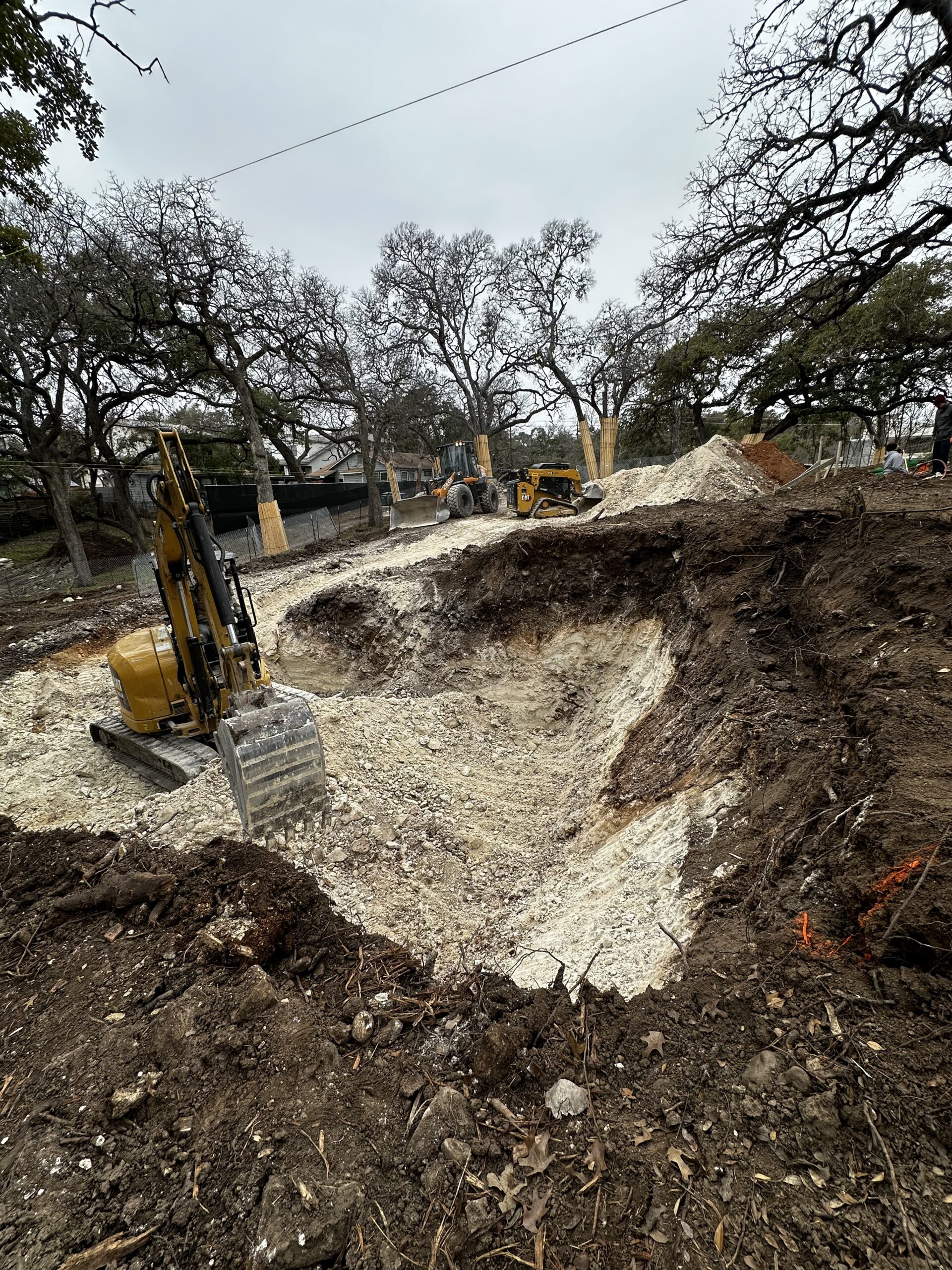
Excavation equipment falls into four main types: excavators, bulldozers, skid steers, and trenchers. Each one handles a different part of the dig. On most Central Texas properties, the mix you need depends less on the size of your project and more on what’s sitting under the topsoil, whether that’s soft clay or solid limestone.
If you’re planning a new driveway, a barn pad, or a pond, it helps to know what each machine does before a contractor shows up with a quote. Here’s a plain-language breakdown of the equipment used for excavation, plus a look at how site conditions in our area change the equation.
What Equipment Is Used for Excavation?
Excavation work generally calls for four machine types. Excavators dig, lift, and load material. Bulldozers push and shape large volumes of earth. Skid steers handle smaller, tighter jobs with swappable attachments. Trenchers cut narrow, precise channels for utility lines and drainage. Most projects use a combination of these, not just one.
Did You Know? A single cubic yard of soil can weigh well over a ton once you factor in moisture and density. That’s part of why matching the machine to the material matters as much as matching it to the job size.
Excavators: The Machine Most People Picture First
When someone says “excavation equipment,” they usually picture an excavator. It’s the tracked machine with a hydraulic arm and bucket that digs, lifts, and rotates to load trucks or place material where it’s needed. Excavators handle foundation digging, pond work, drainage trenches, and general site cuts.
Mini, Standard, and Large Excavators
Excavators come in a range of sizes, and the size matters more than most property owners expect. Mini excavators work well in tight backyards or around existing structures. Standard and mid-size machines cover most residential site prep, from home pads to driveway cuts. Large excavators come out for bigger land development or when a project needs to move a lot of material fast. Caterpillar’s excavator size guide breaks down these size classes in more detail if you want the full technical picture.
When a Smaller Machine Isn’t Actually Faster
A mini excavator looks like the cheaper, easier choice on paper. On a lot of Central Texas properties, that assumption doesn’t hold. Shallow limestone and caliche sit close to the surface across much of Burnet County, and a machine sized for soft soil can grind to a near-stop once it hits rock. We’ll get into how that changes our approach further down.
Bulldozers: Built for Pushing, Not Digging
A bulldozer moves earth horizontally instead of digging down. Its wide, flat blade pushes soil, brush, and debris to clear and reshape land. Bulldozers are the right call for rough grading, land clearing, and any project that needs large volumes of dirt moved across a site rather than lifted out of it.
Pro Tip: If your project involves both clearing and grading, ask your contractor whether a bulldozer pass before excavation begins could save time. Clearing the site first often lets the excavator work faster once it arrives.
Skid Steers: The Small-Site Specialist
Skid steers are compact, highly maneuverable machines that turn within their own footprint. They’re a common sight on residential jobs where space is tight, like a fenced backyard or a lot with mature trees close to the work area.
Attachments That Turn One Machine Into Five
What makes a skid steer valuable is the attachment system. The same base machine can run a bucket, a grading blade, a trencher attachment, an auger, or a brush cutter, depending on what the job calls for. That versatility is why skid steers show up on small driveway repairs as often as they do on larger site prep jobs.
Trenchers: Precision for Utility and Drainage Lines
Trenchers cut narrow, consistent channels for water lines, electrical conduit, septic lines, and French drains. Instead of a bucket, they use a rotating chain or wheel to slice through soil at a set depth and width, which limits how much ground gets disturbed compared to a wider excavator dig.
Depth matters here, and it’s regulated. Under OSHA’s excavation and trenching standard, trenches five feet deep or more generally require a protective system unless the excavation is entirely in stable rock. That standard exists because trench walls can collapse without warning, and it shapes how depth, soil type, and safety planning fit together on any real job.
Did You Know? Texas plumbing code sets a minimum burial depth of 12 inches for water service lines. Electrical conduit typically needs to go deeper, often 18 to 24 inches, depending on the wiring method and local code.
Why We Don’t Always Reach for the Same Machine Twice
Here’s where a lot of excavation quotes go sideways. A contractor sizes the job on paper, shows up with a standard machine, and then hits limestone bedrock six inches under the topsoil. Central Texas soil does this often enough that we plan for it before the first bucket goes in the ground, not after.
Before we commit equipment to a job, we walk the site and check what’s actually under the surface, not just what the project type usually calls for. If test digging turns up shallow rock, we’ll bring a machine fitted with a hydraulic breaker attachment instead of forcing a standard bucket through material it wasn’t built to handle. That decision costs us a little more planning time up front. It saves the customer from a stalled project and a change order halfway through the job. You can see how this plays out across different project types in our complete guide to excavation, and how it connects to broader site work in our excavation services.
Pro Tip: Ask any contractor you’re vetting how they handle unexpected rock. If the answer is “we haven’t run into that,” treat it as a caution sign for Central Texas work, not reassurance.
The same rock conditions come up in grading work, too. If your project involves reshaping a larger piece of land alongside excavation, our land grading services page covers how we sequence that work.
Excavation Equipment at a Glance
| Equipment | Best For | Central Texas Consideration |
| Excavator | Digging, trenching, foundations, ponds | Needs the right size and attachment for shallow limestone |
| Bulldozer | Land clearing, rough grading | Efficient on open acreage, less useful in tight spaces |
| Skid Steer | Small sites, attachment-based work | Maneuvers well around trees, fences, and structures |
| Trencher | Utility and drainage lines | Rocky ground may call for an excavator instead |
Getting the Right Equipment on Your Site
The equipment used for excavation matters less than whether it matches your soil, your site access, and what you’re actually building. A machine that’s perfect for a wide-open pasture can be the wrong choice for a fenced residential lot, and a mini excavator that handles clay easily can stall out on caliche a few inches down.
Ready to start your project? Contact TexTerra for a free site estimate, and we’ll walk your property, check what’s under the surface, and bring the right machines the first time.
Frequently Asked Questions
What is the most commonly used excavation equipment?
Excavators are the most widely used piece of excavation equipment because they dig, lift, and load material in one machine. Most residential and commercial projects use an excavator as the primary tool, often paired with a bulldozer or skid steer for supporting work.
Can a mini excavator dig through rock or caliche?
A mini excavator can handle light caliche with the right bucket, but shallow limestone bedrock usually requires a larger machine or a hydraulic breaker attachment. Testing the soil before work begins helps avoid a stalled project.
What’s the difference between an excavator and a backhoe?
An excavator is a fully rotating tracked machine built mainly for digging and material handling. A backhoe is a wheeled machine with a loader bucket on the front and a smaller digging arm on the back, better suited to lighter, more mobile jobs.
Do all excavation companies use the same equipment?
No, equipment varies by company size, fleet, and the regions they serve. Contractors familiar with Central Texas soil conditions typically carry equipment suited to rocky ground, while others may rely on standard machines built for softer soil.
How do I know which excavation equipment my project needs?
The right equipment depends on your project type, site access, and soil conditions, which is why a site visit matters more than a phone estimate. A contractor who checks your soil before quoting equipment is more likely to get it right the first time.