
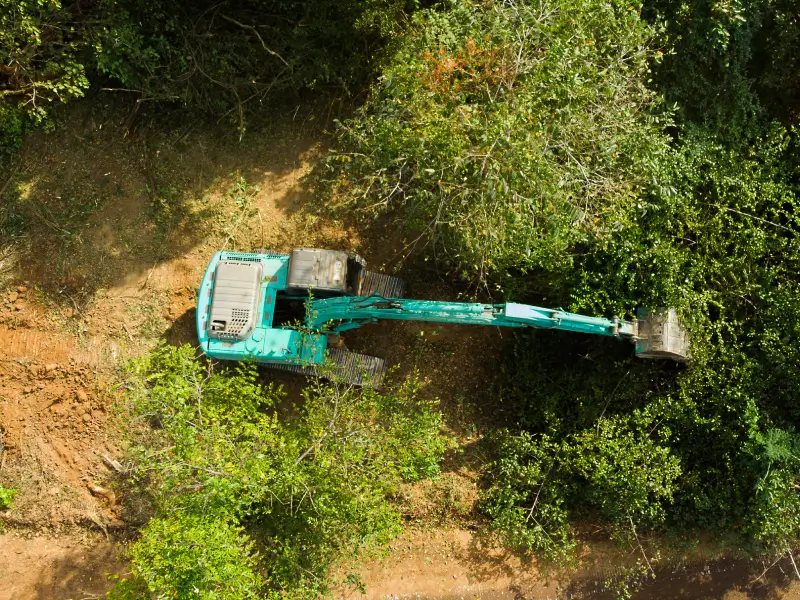
A timeline starts before the excavator arrives. The crew needs a clear scope, a workable access route, utility information, and a plan for soil. The right question is not only “How many days will the machine run?” It is “What must be ready before excavation, and what must be true before the next phase begins?”
TexTerra Solutions’ verified target route for excavation services is the excavation services page. Use it as the starting point for a project timeline request, then share the site address, plans, rough dimensions, known soil conditions, and desired handoff date.
Typical excavation timelines by project type
Timeline ranges are useful for an early conversation. They become more reliable after the site, plan, and access conditions are reviewed.
Residential foundation: about 1–3 days
A simple, accessible foundation excavation may fit within one to three working days. That range assumes the work area is ready, utilities are located, weather cooperates, and the soil does not introduce a major surprise. Deeper excavation, rock, groundwater, extra hauling, or tight access can add work.
Small driveway, trench, or drainage cut: often a shorter work period
A limited trench or driveway cut may take less time than a full foundation. The actual schedule depends on length, depth, material, utility crossings, and whether the soil stays on site. A drainage project may also require careful grade checks that affect the handoff.
Broader site preparation: about 1–2 weeks
Site preparation can include clearing within the work limits, stripping topsoil, excavation, spreading or hauling material, grading, and preparing a building area. A one-to-two-week planning range may fit a broader scope, but it is not a standard production promise. More than one machine or trade may be involved.
Rain can affect soil strength, truck access, and finished grade. Concrete, utility, survey, and inspection schedules also shape the handoff. For safety planning, review OSHA trenching and excavation guidance. For runoff planning, consult EPA construction stormwater information.
Did You Know? Excavation time and total project time are different. A machine may finish digging while inspections, hauling, imported fill, or the next trade still controls the schedule.
What factors affect the excavation schedule?
Several conditions shape the timeline. The most useful estimate names them instead of offering a single number without context.
Soil and groundwater
Loose soil may move quickly but may need support or replacement. Clay can hold water and slow handling. Rock may require different equipment. Groundwater can change the sequence and may call for pumping or drainage planning. A site visit or available soil information can improve the estimate.
Project size and depth
A small shallow cut and a deep foundation are not comparable. The quantity of material, number of grade changes, trench length, and required accuracy all affect production. More soil also means more stockpile or haul decisions.
Permits, utilities, and inspections
Required permits, utility marks, private line locations, and inspection windows can affect the start date. A project cannot safely move at machine speed if the paperwork or utility information is incomplete. Ask which approvals belong to the owner, builder, designer, or contractor.
Access and staging
The machine needs a route into the work zone. Trucks need space to turn, load, and leave. Narrow gates, soft shoulders, overhead lines, nearby structures, and limited stockpile space can change the work sequence.
Weather and coordination
Rain can affect soil strength, truck access, and finished grade. Concrete, utility, survey, and inspection schedules also shape the handoff. Build a plan around work conditions and dependencies rather than a calendar date alone.
Pro Tip: Ask for a best-case range, the main schedule risks, and the information that would move the estimate from a range to a working plan.
What happens during a normal excavation sequence?
A clear sequence helps everyone understand where time goes.
- Review the plan and limits. Confirm the footprint, elevations, access, protected areas, and material-handling plan.
- Prepare the work zone. Clear planned obstacles and protect features that remain. Put safety and drainage controls in place where required.
- Strip and separate material. Keep topsoil, reusable fill, and unsuitable material from becoming one mixed pile when the plan calls for separation.
- Excavate and check grade. Dig the planned area while checking depth and shape. Unexpected soft soil, water, rock, or debris should be documented.
- Stockpile, spread, or haul. Decide where material goes. Loading and disposal can add time beyond the digging itself.
- Prepare the handoff. Address soft spots, access, drainage, and grade before the next trade takes over.
A useful field lesson is that the handoff should be defined at the start. “Finished digging” may not mean “ready for concrete.” The project team should agree on what ready means.
How can you shorten an excavation timeline?
Owners cannot control soil or weather, but they can reduce avoidable delays. Have plans, surveys, utility information, permits, access instructions, and contact names ready. Remove vehicles and personal items from the work area. Decide whether reusable soil stays on site and where it may be placed.
Share the intended use of the site. A rough access opening, foundation excavation, drainage swale, and finished building pad need different work. Tell the contractor about wells, septic systems, private utilities, drainage issues, fences, and areas that must remain untouched.
Set a change process before work starts. If the crew finds rock, buried debris, soft soil, or water, pause long enough to document the condition and agree on the response. Clear decisions can prevent repeated mobilization and schedule confusion.
For related service information, the TexTerra Solutions homepage is a verified internal route. A dedicated article about soil conditions is pending verification and is not presented as a live page.
Questions to ask when requesting a timeline estimate
Ask what the stated range includes. Does it cover clearing, excavation, loading, stockpiling, disposal, grading, compaction, and cleanup? Ask what is excluded, what the owner must provide, and what conditions could change the plan.
Ask how grade will be checked and what the next trade needs. Ask about access for equipment and trucks. Ask how weather, inspections, and utility conflicts will be handled. These questions turn a broad estimate into a useful project conversation.
The excavation services route is the verified target page for this article. A future internal link to a detailed site-preparation guide is marked pending verification until a live route is confirmed.
FAQs about excavation timelines
How long does excavation take for a house foundation?
A straightforward residential foundation may take about one to three days under favorable conditions. Soil, depth, rock, water, access, hauling, weather, utility work, and inspection timing can change that range.
How long does site preparation take?
Broader site preparation may take about one to two weeks as an early planning range. The scope must be defined because clearing, excavation, grading, hauling, imported material, drainage, and inspections may all affect the schedule.
Do permits affect excavation timing?
Yes. Required permits, utility locates, private line checks, and inspections can affect both the start date and the handoff. Confirm which approvals are needed and who is responsible before scheduling equipment.
How can I get a project-specific timeline?
Share the address, plans, dimensions, site access, known soil or drainage conditions, and desired handoff date. Contact TexTerra Solutions through its excavation services page for a project discussion.
Build the schedule from site facts
A useful excavation timeline connects the scope, site conditions, approvals, access, weather, material handling, and next trade. The ranges in this guide can start the conversation, but they should not replace a site-specific review.
Contact TexTerra Solutions through the verified excavation services page and provide the project details. A clear scope gives the team a better basis for discussing timing and the conditions that could change it.